Itineraries
A 15-day Europe itinerary: Italy, France and Spain
A field-tested itinerary across Rome, Florence, Paris, Provence, Barcelona and Madrid. Where to take the train, where to fly, how much it costs, and what to cut when time gets tight.
The first rule for anyone going to Europe in 15 days
More countries don't mean more Europe. The classic trap is trying to squeeze Italy, France, Spain, Portugal, Switzerland, the Netherlands and the Czech Republic into two weeks. The result: the traveller sees train stations, suitcases, taxis and check-ins. They don't see Europe.
This itinerary cuts the noise. Three countries, six cities, no lost day in transit. The premise: Europe only reveals itself when the traveller sits in a café for an hour and looks.
Why Italy, France and Spain together
It's not just the most obvious trio. It's the most cohesive. The three cultures speak to each other — Mediterranean cuisine, historical Christianity, Renaissance and modern art, life in the public square. You don't change continents when you cross the border. You change accents.
And the logistics help: short flights between the three (1h–2h30), high-speed trains within each, manageable distances.
The 15-day itinerary
Days 1–4: Rome and Florence
Land in Rome on day 1 morning. Stay between Centro Storico and Trastevere — walk everything. Three nights in the city give time for the Vatican (with a guide), the Colosseum (gladiator gate entrance), Trevi Fountain at dawn and dinners in Trastevere.
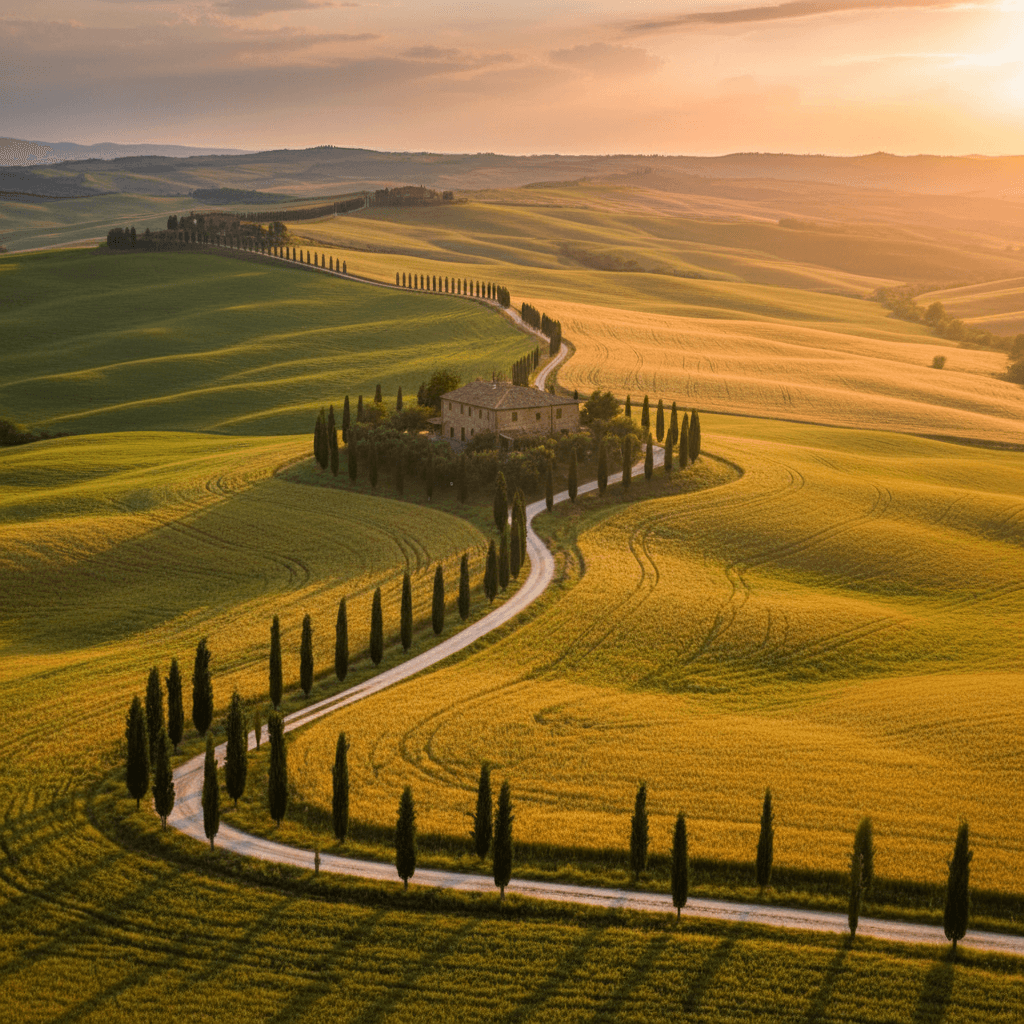
Day 4 morning, Frecciarossa Rome–Florence in 1h30. Two nights in Tuscany. Florence itself can be done in two days with Uffizi Gallery, Accademia (David), Ponte Vecchio and dinner with a view at Piazzale Michelangelo. If you prefer a more bucolic base, stay at an agriturismo near San Gimignano.
Days 6–7: Venice or straight to Paris
The itinerary forks here. Venice is worth it if it's your first time in Europe — it's unique, and it's vanishing. But it costs a full day of logistics. If the priority is classic Italy, swap it for another Tuscan night.
Either way, day 7 late afternoon fly to Paris (Florence or Venice → Paris, 2h).
Days 8–11: Paris and Provence
Three nights in Paris is the minimum. Stay in the 6th or 7th arrondissement. Essential itinerary:
- Day 8 — Marais, Notre-Dame from outside, Île Saint-Louis, dinner in Saint-Germain.
- Day 9 — Louvre in the morning (pre-booked entry), Tuileries, late afternoon in Marais or Montmartre.
- Day 10 — Versailles half day, free late afternoon, dinner at a 7th bistrot.
Day 11 morning, TGV from Paris to Aix-en-Provence in 3h. Stay at a house in Lourmarin, Gordes or Saint-Rémy. Two nights in deep France — Aix market, Luberon vineyards, Provençal dinner.
Days 13–15: Barcelona and Madrid
Flight Marseille–Barcelona or Avignon–Barcelona (1h30). Stay in El Born or Eixample. Two days in Barcelona are enough for Sagrada Família (with a scheduled tower visit), Park Güell, Barri Gòtic, La Boqueria and tapas in Gràcia.
Day 14 afternoon, AVE Barcelona–Madrid in 2h30. Last night in Madrid — dinner at Mercado de San Miguel, tavern in La Latina, return flight on day 15.
The critical question: train or plane
The practical rule we use:
| Leg | Mode | Total door-to-door time |
|---|---|---|
| Rome → Florence | Train | 2h30 |
| Florence → Venice | Train | 3h |
| Florence → Paris | Plane | 4h30 |
| Paris → Aix-en-Provence | Train | 3h30 |
| Provence → Barcelona | Plane | 3h30 |
| Barcelona → Madrid | Train | 3h |
The rule: under 4 hours door-to-door, take the train. Above that, planes win on comfort even with check-in. Train in Europe isn't just efficient — it's part of the experience. You leave a central station, arrive at another. No peripheral airport, no one-hour transfer.
What does this itinerary cost
For two people, 4★/boutique standard:
- Brazil–Europe round-trip flights: USD 1,200 to 2,200 per person
- 14 nights of lodging: USD 4,400 to 8,000 (couple)
- Internal trains: USD 900 (couple)
- Internal flights (Florence → Paris, Provence → Barcelona): USD 500 (couple)
- Food and attractions: USD 2,800 to 4,400 (couple)
Reference total: USD 11,000 to 18,000 for the couple.
When to go
The ideal window is May, early June or September. Avoid August at all costs — Italy and Spain enter collective holidays, restaurants close, cities empty of residents and fill with tourists, and the heat can exceed 40°C.
Winter works for Paris and Madrid — fewer tourists, breathable museums, cinematic light. But Provence and Tuscany lose their charm.
Five things nobody tells you
- Book restaurants 30 days ahead, especially in Paris and Florence. The best don't take walk-ins.
- Buy museum tickets in advance — Uffizi, Vatican, Louvre, Sagrada Família. Two-hour queues are real.
- Use private guides selectively — three hours at the Vatican with a historian guide are worth more than three days wandering alone.
- Cars are banned in the historic centre of nearly every Italian city. Don't rent a car for the urban part.
- The best cafés are off the main square. Walk three blocks.
What to cut when time tightens
If the trip becomes 12 days instead of 15, cut Provence. Painful, but it's the most sacrificable leg. If it becomes 10 days, cut Madrid and add a night to Paris. If it becomes 8 days, focus on two cities — Rome + Paris is the best pair — and come back next time.
Where our consultancy makes the difference
European itineraries seem simple — everyone "knows" Paris, Rome and Barcelona. But it's precisely in the obvious choices that the most time gets lost: the hotel that seems well located but sits on a party street, the restaurant on every blog that serves tourists, the train with good seats and the one without. We work with local suppliers in all three capitals and can secure bookings, guides and experiences not available online. If you'd like to begin the conversation, chat with our consultancy is the way.