Itineraries
Patagonia: best season, what to do, and how to split between Argentina and Chile
El Calafate, El Chaltén, Torres del Paine and Bariloche in a tested itinerary. When to go, what it costs, and the truth about crossing the land border.
Why Patagonia naturally splits into two countries
Patagonia occupies the southern third of Argentina and Chile, and each side offers different geography. It's not redundancy — it's complementarity. Visiting only one side means leaving half the story behind.
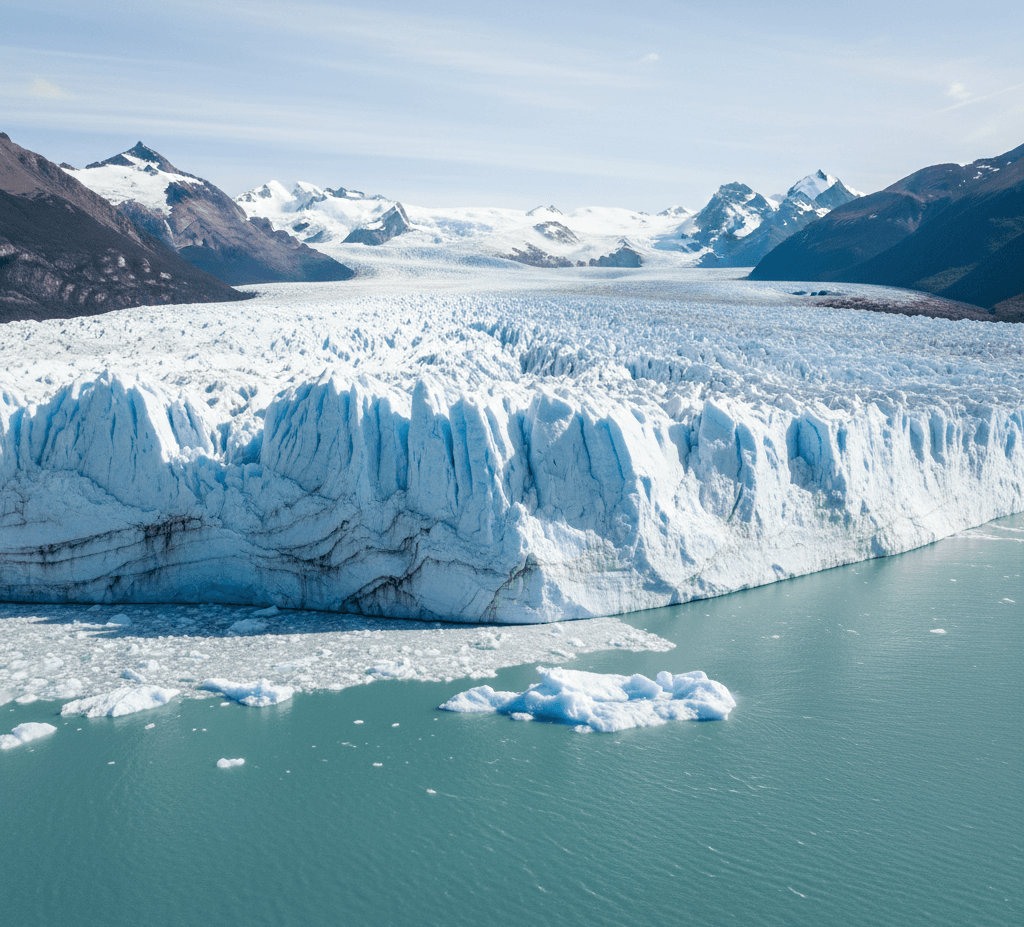
- Argentinian side: vast steppes, Perito Moreno glacier, Mount Fitz Roy and the village of El Chaltén. Easier logistics, more frequent flights from Brazil, lower cost.
- Chilean side: steeper range, Torres del Paine with its three granite towers, southern fjords, wilder national park. Costlier logistics, higher exclusivity.
The right question isn't "Argentina or Chile." It's "how to combine them in 10–14 days."
The best season: Patagonia's narrow window
Patagonia has a much tighter tourism window than most destinations. Outside it, the place closes.
| Month | Climate | Recommendation |
|---|---|---|
| November | Spring, strong winds, long days | Good cost/crowd ratio |
| December | Early high season | Excellent |
| January–February | Peak, crowded, expensive | Only with advance booking |
| March | Autumn, incredible colours, fewer tourists | Probably the best window |
| April | Cold increasing, some hotels closing | For photographers and adventurers |
| May–September | Winter, most close | Ski in Bariloche and Las Leñas |
The practical recommendation: go between late November and mid-March. The golden window is March — pleasant temperature, autumn colour landscape, crowds gone, hotels open.
The 12-day itinerary across Argentina and Chile
Days 1–3: El Calafate and Perito Moreno
Fly São Paulo → Buenos Aires → El Calafate (or direct via Santiago on LATAM, if you prefer opening in Chile). Three nights in El Calafate. The Perito Moreno day is mandatory — walkway hike, watching ice falls of hundreds of tons (happening every few minutes), optional mini-trek over the glacier.
Add a day cruising Lake Argentino to see Upsala and Spegazzini, glaciers less famous than Perito Moreno but equally cinematic.
Days 4–6: El Chaltén and Fitz Roy
Four-hour transfer to El Chaltén, the Patagonian trekking village — no traffic lights, no ATM (bring cash), and some of the best trails on the continent. Three nights. Essential hikes:
- Laguna de los Tres (full day, 22 km, front view of Fitz Roy)
- Laguna Torre (full day, 18 km, view of Cerro Torre)
- Mirador de los Cóndores (morning, easy, valley view)
El Chaltén is hard to top. It's the "soul of Patagonia" leg of the itinerary.
Days 7–10: Torres del Paine (Chilean side)
The crossing. Land transfer from El Calafate to Puerto Natales (5h), through the border. Stay inside Torres del Paine National Park — EcoCamp, Awasi Patagonia or Tierra Patagonia are the three most relevant tiers.
Four nights allow:
- Inverted W trek (partial) — Torres base, French Valley and Grey
- Catamaran cruise to Glacier Grey
- Sunrise hike to the Torres base (3h each way, absurd reward)
- Horse-riding with Chilean gauchos in the surroundings
Days 11–12: Bariloche or return via Punta Arenas
The itinerary forks here. For couples and contemplative trips, return via Punta Arenas with a night in El Calafate or Buenos Aires. For adventurers, fly Punta Arenas → Bariloche to close with lake, wine and two more days in the northern range.
The border logistics: what nobody tells you
Crossing the land border between Argentina and Chile is one of the simplest yet most underestimated parts of the itinerary.
- Documentation: a Brazilian passport works on both sides. ID card also (but passport is safer).
- Border post time: 30 minutes to 2 hours, depending on flow. Not the bottleneck. The bottleneck is the transfer — 4 to 6 hours total between El Calafate and Puerto Natales.
- Customs: fresh foods (fruits, meats, dairy) are confiscated. Salami, dulce de leche, packaged coffee pass.
- Currency: Argentinian pesos don't circulate in Chile and vice-versa. Use dollar as a bridge or pay by card.
- Wi-Fi and mobile: switch to a roaming plan before the trip. Argentinian carriers don't work in Chile.
What it costs
For two people, boutique adventure standard (4–5★ lodges, hotel meals, some guided activities):
- Domestic flights (São Paulo → El Calafate → Punta Arenas → São Paulo): USD 1,200 to 1,800 per person
- 11 nights of lodging (with 4 nights at a lodge inside Torres del Paine): USD 5,600 to 11,000 (couple)
- Transfers and excursions: USD 2,000 to 3,600 (couple)
- Food and extras: USD 1,200 to 2,000 (couple)
Reference total: USD 11,000 to 20,000 per couple, 12 days.
Patagonia looks cheap to Brazilians — and partly is, especially the Argentinian side. But the Chilean side (Torres del Paine) costs double per night. The best lodges inside the park go for USD 1,000 to 2,500 per night all-inclusive.
What to cut when time tightens
If the trip becomes 10 days: cut a day in El Calafate and one in Bariloche. Keep the four nights at Torres del Paine — it's what justifies the trip.
If it becomes 8 days: do only the Argentinian side. El Calafate + El Chaltén + Bariloche. Come back for Torres del Paine on another trip.
If it becomes 7 days: focus on only Torres del Paine, flying direct from Santiago to Puerto Natales. Dense itinerary, but works as a first experience.
Mistakes we see all the time
- Buying flights without checking international connection — the São Paulo → El Calafate flight passes through Buenos Aires, with a tight window at Aeroparque (don't confuse with Ezeiza).
- Booking guided treks in El Chaltén two days ahead — wind and weather change viability. Book in El Chaltén with a 24h window.
- Underestimating wind — 80 km/h wind is common. Windproof clothing is more critical than cold clothing.
- Packing light — Patagonia demands a layering system: thermal, fleece, rain shell. Five layers minimum.
- Skipping the Argentinian side thinking Torres del Paine is enough — Perito Moreno is the only glacier in the world you can walk alongside as it moves. Unskippable.
Where our consultancy makes the difference
Patagonia itineraries look standard — everyone sees the same Perito Moreno, the same South Tower. But the trip is elevated by the details: the right lodge inside the park (between the three main options), the right guide in El Chaltén (who knows the valley with less wind that day), the Grey Glacier cruise that leaves before the crowd. We work with suppliers on both sides of the border and handle the crossing for you. If you'd like to begin the conversation, chat with our consultancy is the way.